
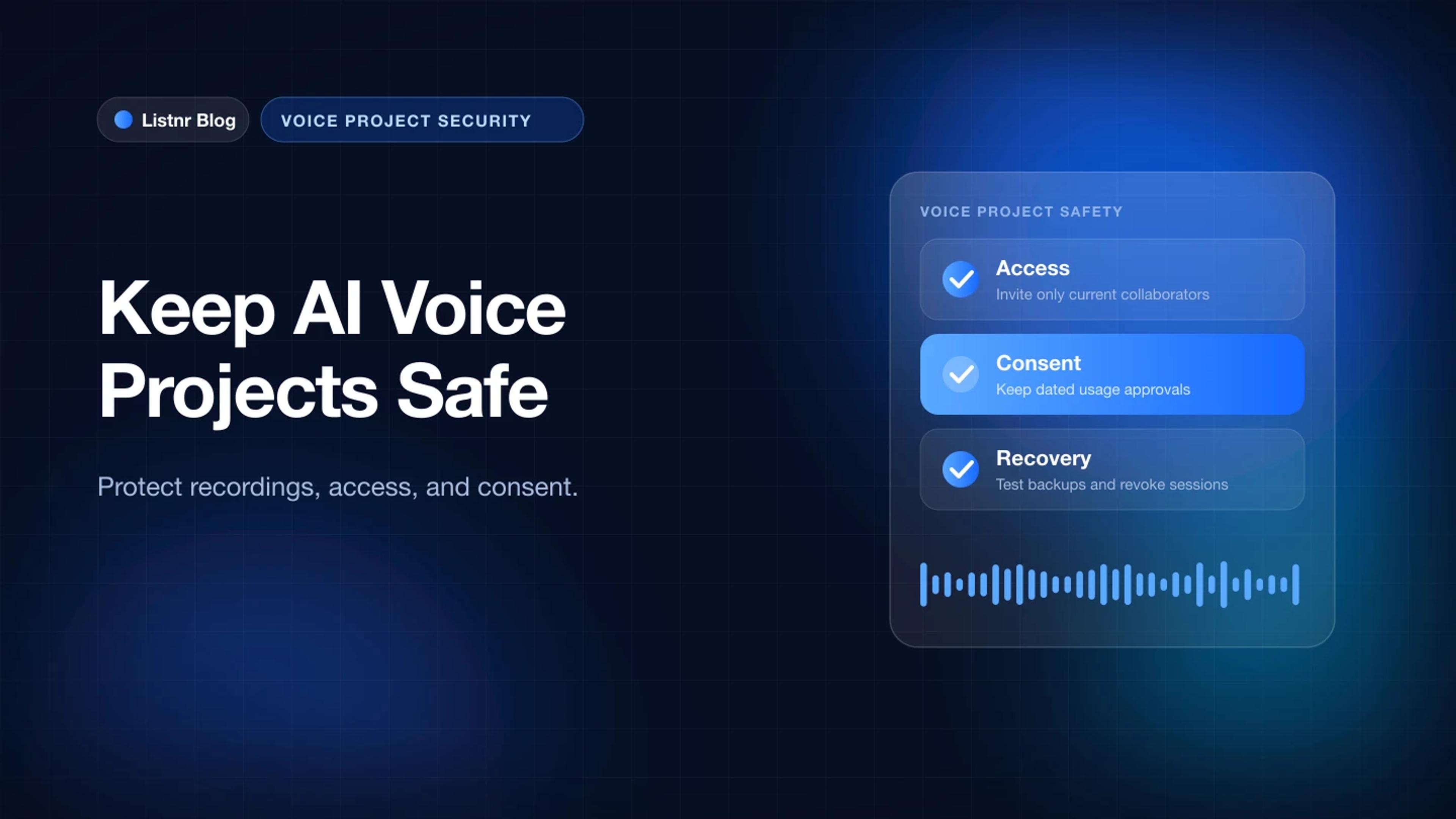
A shared folder consists of an unfinished narration. The script contains client notes, the audio includes a cloned voice, and three freelancers still have access even though one left the project last month.
Although nothing looks wrong, the project already has several openings an intruder could exploit.
Protecting AI voice projects means treating the following as separate assets:
- Scripts
- Recordings
- Voice models
- Account credentials
- Publishing rights.
Each one carries a different risk. A stolen password might expose an entire workspace. Meanwhile, you can reuse a leaked voice sample long after the account is recovered.
Start With the Device, Not the Audio Platform
Most creators focus on cloud permissions. But they overlook the laptop that stores -
- Raw takes
- Browser sessions
- Invoices
- Export folders.
If that device is compromised, careful sharing settings won’t rescue much.
Reliable endpoint software belongs in this setup. For instance, Bitdefender antivirus protection can add a useful defensive layer against malware, ransomware, and suspicious downloads. It protects before they reach project files.
It shouldn’t replace cautious behavior, though. A producer might open an unexpected “revised script” attachment. They can still create trouble. This is especially true if browser sessions remain signed in.
So, patch operating systems and audio tools. Also, patch browser extensions and plug-ins. But remove unused software.
There might be a forgotten noise-reduction plug-in from two years ago. It may still run with broad file permissions. This is an awkward amount of trust to give abandoned code.
Separate Files by Sensitivity
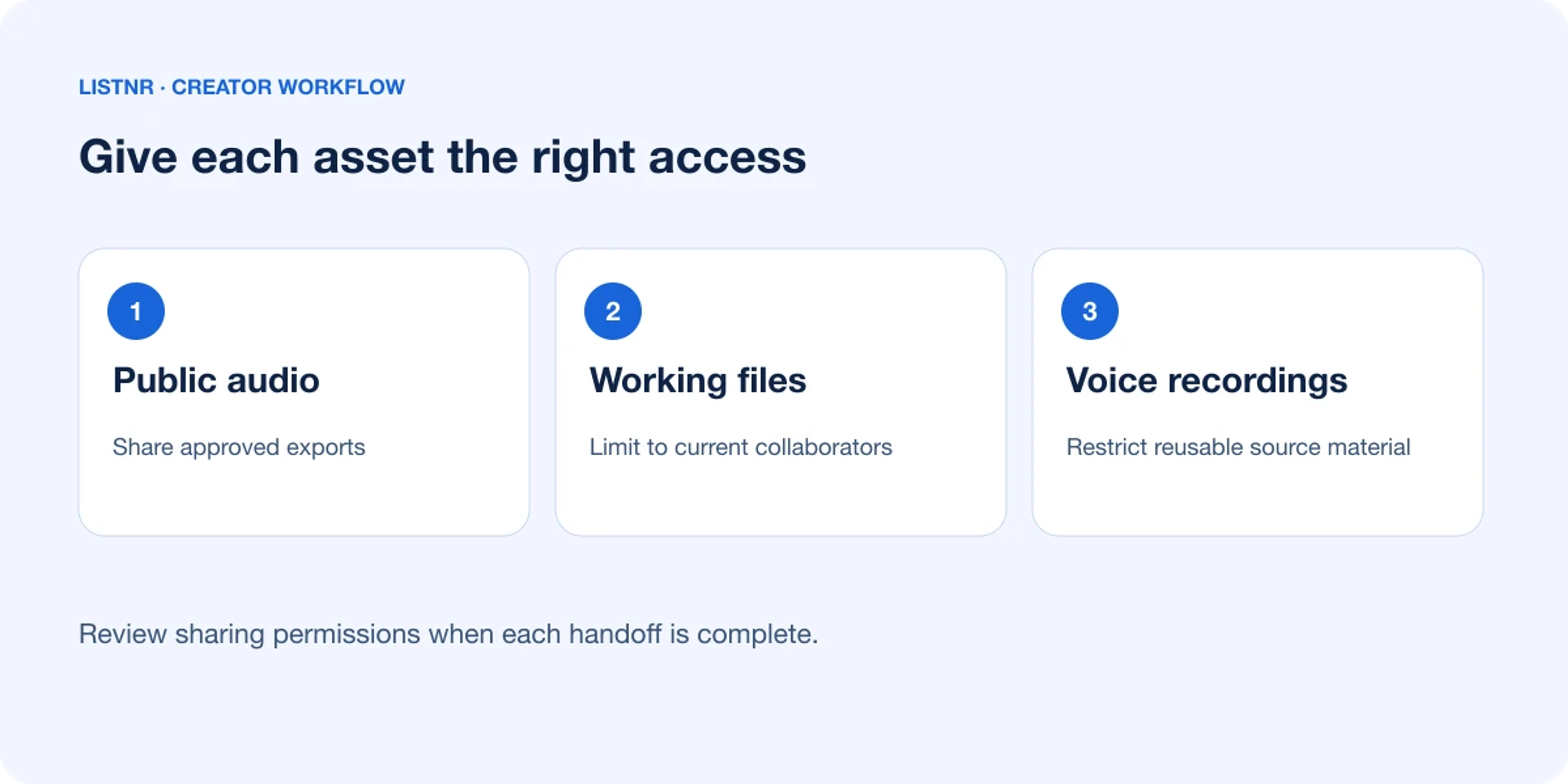
Not every audio file needs identical treatment. A published MP3 is different from a clean voice recording that could train a convincing imitation.
Make sure to map -
- Where each asset lives
- Who can reach it
- When that access should end.
This doesn’t need an elaborate governance program. A small team can maintain a one-page register and review it at delivery.
Tighten Collaboration Without Freezing the Work
Should every contractor receive the narrowest possible access? Usually, yes. But this isn’t always clean. To finish a two-hour recording under deadline, an editor may need -
- Raw audio
- Pronunciation notes
- Several script versions.
In fact, the workable compromise is time-bound access. So, give people the files required for their current task. Then remove permissions once the handoff is complete. Also, avoid shared accounts. This is because they blur activity records and make password changes disruptive.
A practical review might include:
- Delete public links created during rushed feedback rounds.
- Remove former collaborators from storage and transcription. Keep publishing tools separate.
- Require multifactor authentication. Do it through an authenticator app or security key.
- Store recovery codes somewhere other than the production laptop.
- Check connected apps. Revoke anything unfamiliar or dormant.
Of course, these checks take time. For a solo creator publishing disposable experiments, a detailed weekly review may be excessive. For client work or reusable voice models, the cost becomes easier to defend.
Plan for Misuse, Not Just File Loss
Backups solve accidental deletion. They don’t solve impersonation.
So, document the following data:
- Who owns the recordings
- Where synthetic versions may appear
- What happens when consent is withdrawn.
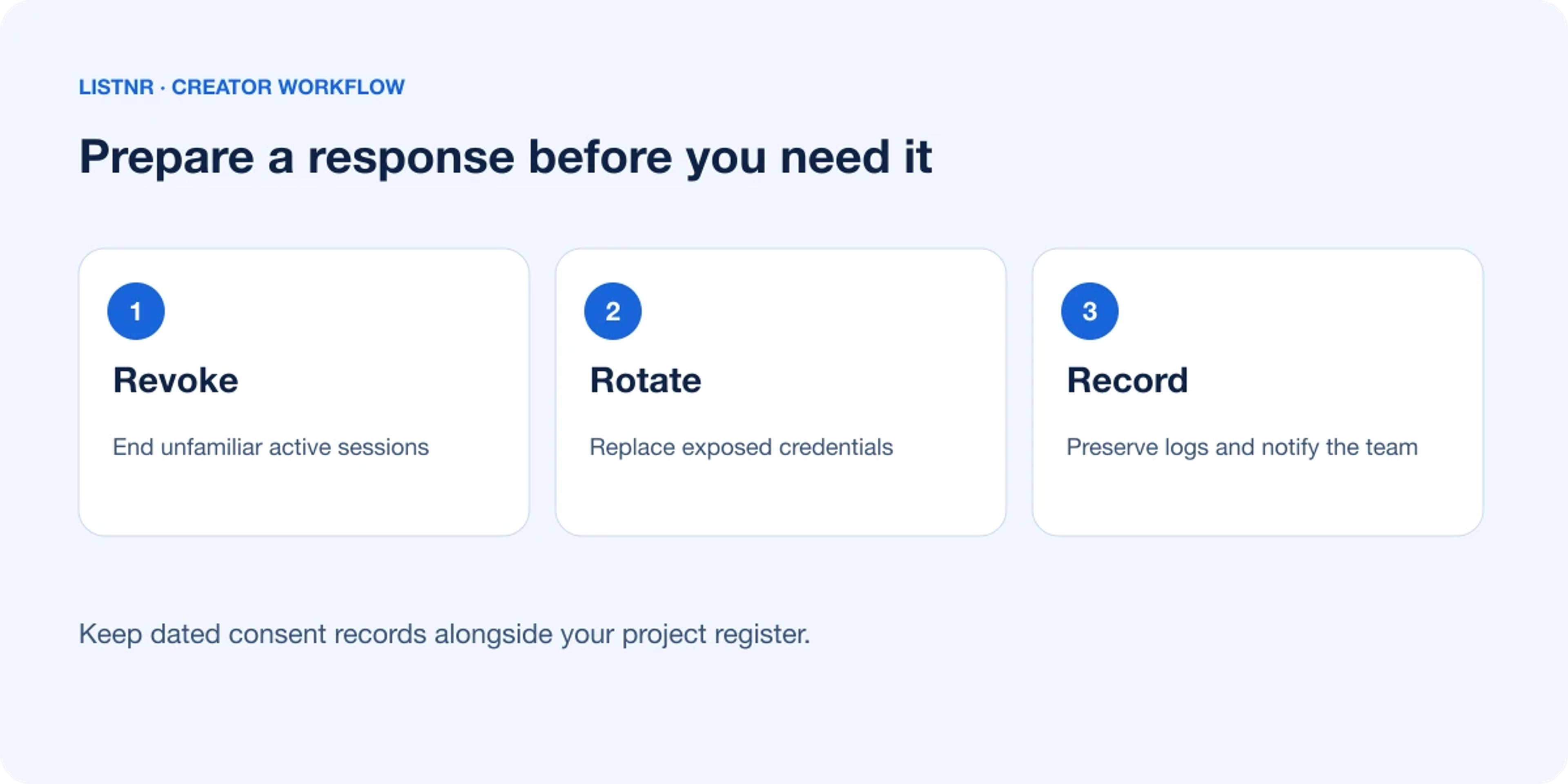
Keep dated copies of approvals. Most of the time, a voice belongs to an employee, customer, actor, or contractor. Then, a vague “sounds good” message isn’t a durable usage agreement.
Therefore, watch for the following -
- Unexpected exports
- Login alerts
- Sudden usage spikes
- Audio appearing on channels you don’t control.
If something goes wrong, revoke active sessions. Also, rotate passwords and API keys. Moreover, preserve logs and notify affected collaborators.
Make Security Part of the Production Routine
Safe AI voice projects don’t depend on one defensive product. They also don't depend on a perfect policy document. They depend on dull, repeatable habits:
- Controlled access
- Patched devices
- Clear consent records
- Isolated credentials
- Backups that someone has actually tested.
That routine protects more than audio. It preserves client confidence and keeps publishing schedules on track. It also limits the damage a copied voice can cause after the original file is out of sight.
About Listnr Team
Listnr Team writes and curates content for the Listnr editorial workflow.