
TL;DR
Ten years ago, a computer reading text aloud sounded like a computer. You could hear the seams: flat pitch, odd stresses, words glued together from recorded fragments. Today a good AI voice can read a product demo, a be…
What Is Neural TTS? How AI Voices Actually Work
Ten years ago, a computer reading text aloud sounded like a computer. You could hear the seams: flat pitch, odd stresses, words glued together from recorded fragments. Today a good AI voice can read a product demo, a bedtime story, or a Hindi news script well enough that most listeners never stop to wonder who is speaking. The reason for that jump has a name: neural text to speech.
If you make voiceovers, narrate courses, or build anything that talks, understanding how neural TTS works pays off quickly. It explains why some scripts come out sounding natural and others trip over a number or a brand name, why one voice can whisper while another cannot, and what you can actually do to get better takes. This guide covers the mechanics in plain language, where the technology still fails, and how to write for it.
The Short Answer
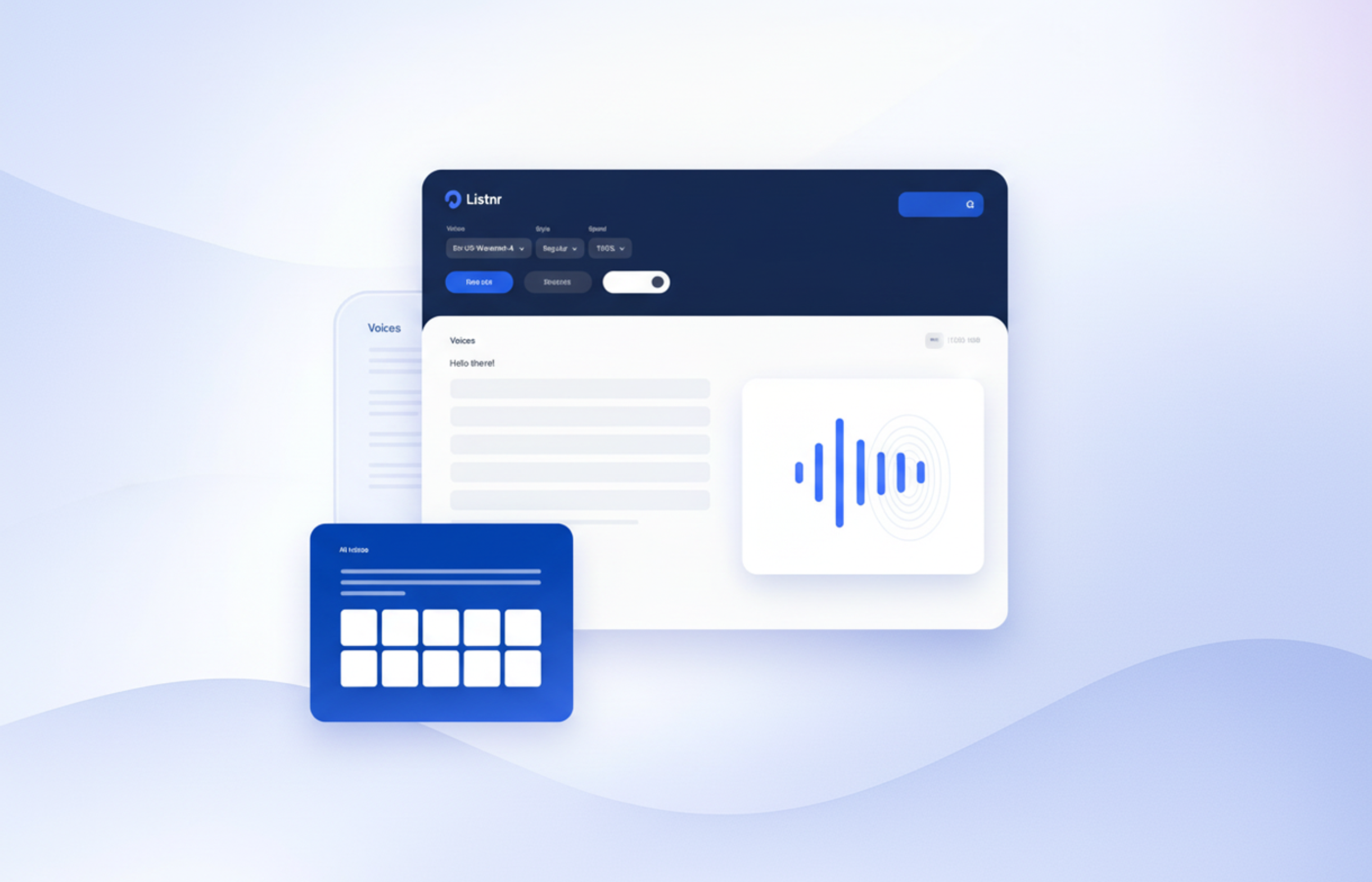
Neural TTS is text to speech generated by deep neural networks that learn how people speak from large amounts of recorded speech, instead of following hand-written rules or stitching together pre-recorded clips. The network predicts the rhythm, pitch, and emphasis of a sentence and then generates the audio waveform directly. That is why neural voices sound fluid and expressive, where older systems sounded choppy or monotone.
In practice, neural TTS means:
- Natural intonation that rises for questions and softens at the end of a thought
- Smooth transitions between words, with no audible splicing
- The ability to carry emotion or a speaking style, such as calm narration or an energetic ad read
- One model that can serve many voices and, increasingly, many languages
How Text to Speech Worked Before Neural Networks
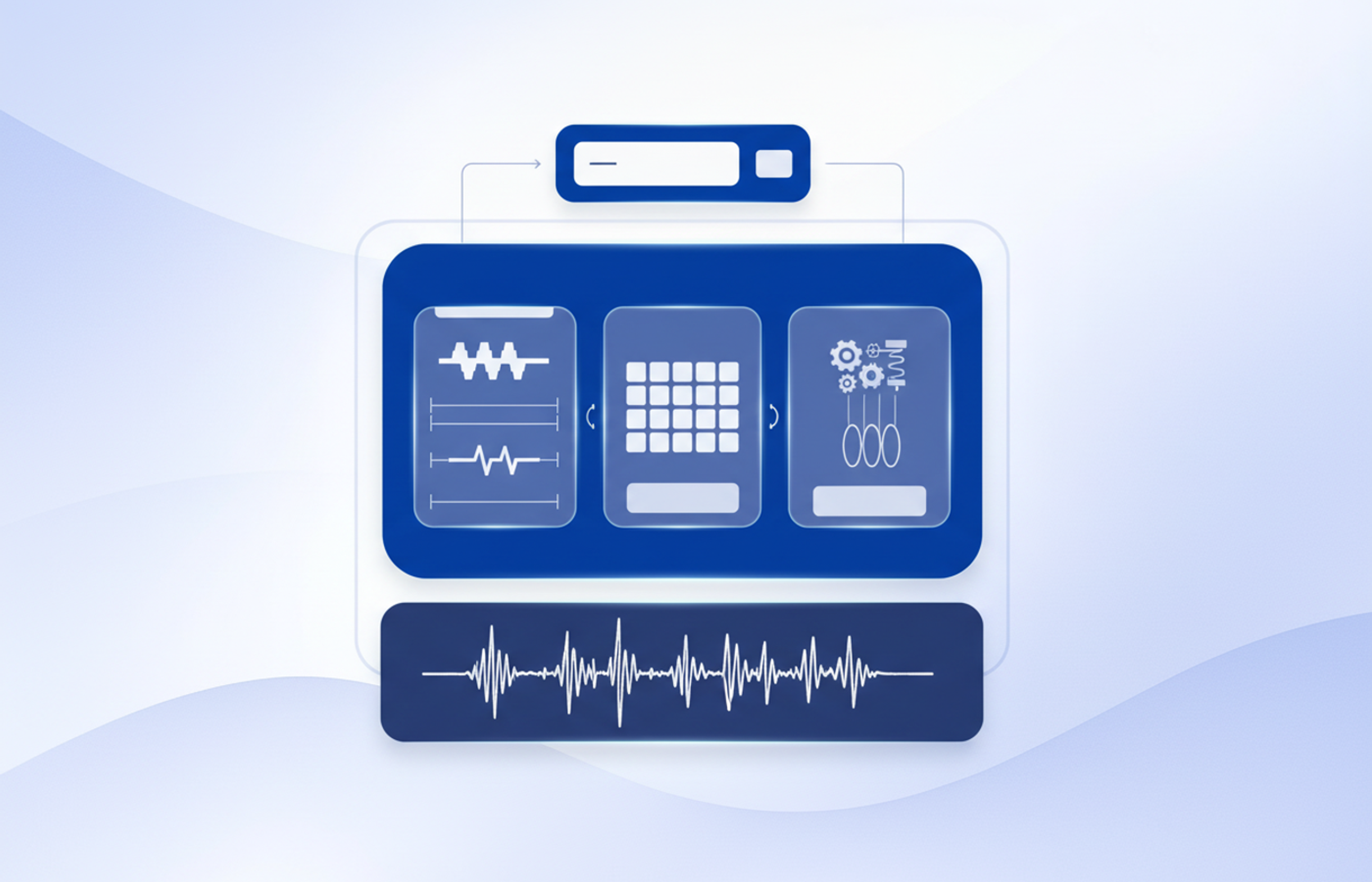
To see why neural TTS matters, it helps to know what it replaced. Two approaches dominated for decades.
Concatenative synthesis recorded a voice actor reading thousands of sentences, chopped the recordings into tiny units, and reassembled them to form new words. When the right units existed, it could sound surprisingly real. When they did not, you heard glitches and jumps in pitch. Every new voice meant another long recording session, and changing the emotion meant recording everything again.
Statistical parametric synthesis used models to predict acoustic features and then ran them through a vocoder to make sound. It was flexible and compact, but it had a signature muffled, buzzy quality. Many people still associate "robot voice" with this era.
| Approach | How it makes speech | What it sounds like | Main limitation |
|---|---|---|---|
| Concatenative | Splices recorded fragments | Real in places, choppy at joins | Needs huge recordings per voice, no flexible emotion |
| Statistical parametric | Predicts features, then vocodes | Smooth but muffled and flat | Unnatural timbre and prosody |
| Neural TTS | Learns speech patterns end to end | Fluid, expressive, human-like | Needs large training data and compute |
How Neural TTS Works, Step by Step
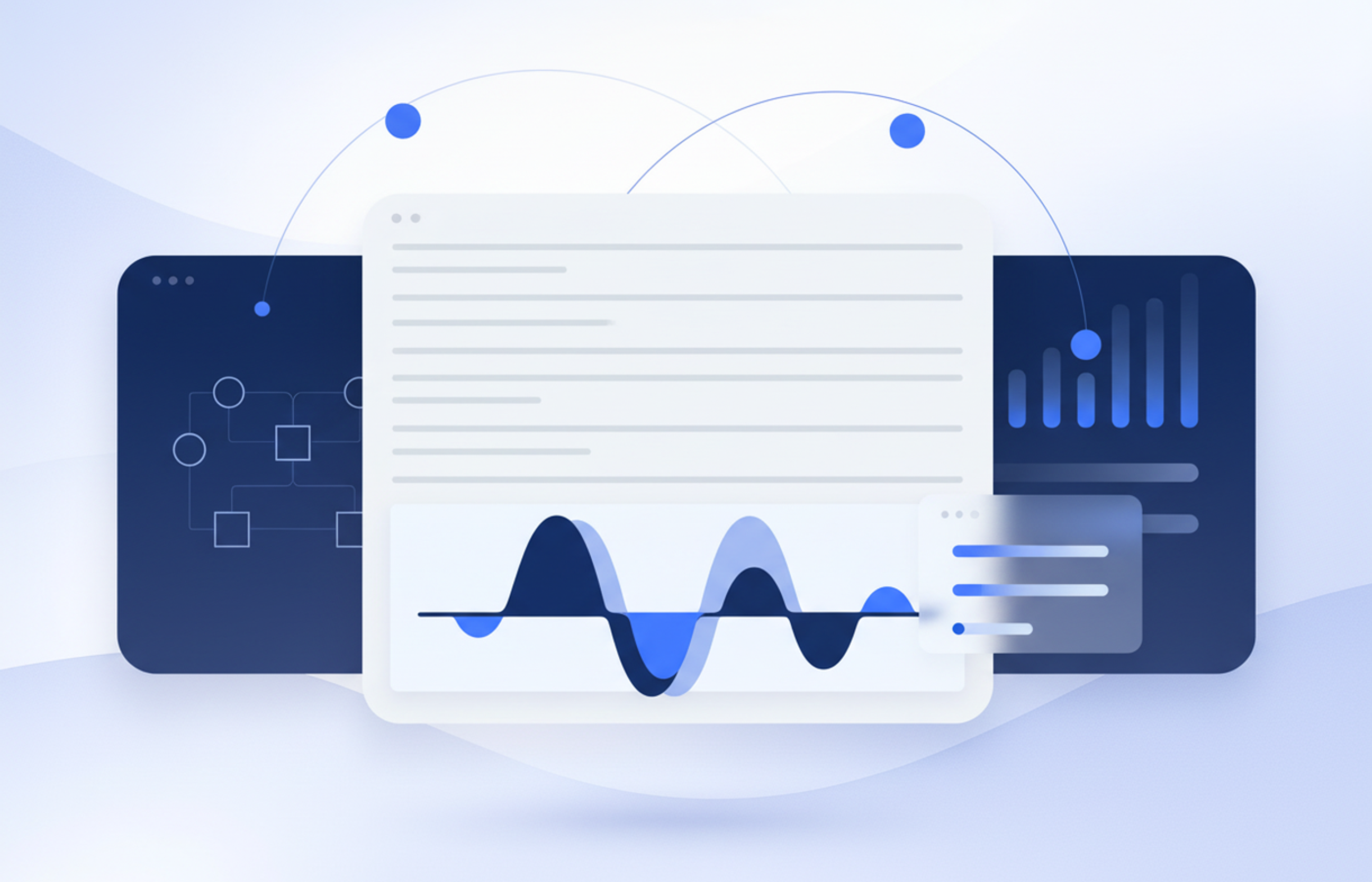
Different systems package the pieces differently, but almost every neural TTS pipeline does three jobs.
1. Text analysis: figuring out what to say
Raw text is ambiguous. "Read" can rhyme with "reed" or "red." "St." can mean Saint or Street. "2026" might be a year or a quantity. The first stage normalizes the text, expanding numbers, dates, abbreviations, and symbols into words, and converts those words into phonemes, the individual sounds of a language. This stage is also where many pronunciation errors begin, which is why pronunciation controls exist in serious tools.
2. The acoustic model: deciding how to say it
This is the core of neural TTS. A neural network takes the phonemes and predicts a detailed representation of the speech, usually a mel spectrogram, which is a picture of how energy is spread across frequencies over time. Crucially, it also decides the prosody: how long each sound lasts, where the pitch rises and falls, and which words get stressed.
Prosody is what separates a voice that reads from a voice that speaks. The 2017 Tacotron 2 paper showed that a sequence-to-sequence network could learn prosody directly from paired text and audio and produce speech that listeners rated close to human recordings. Later models such as FastSpeech 2 generated all frames in parallel instead of one at a time, which made synthesis far faster and more stable on long passages.
3. The vocoder: turning the prediction into sound
The spectrogram is not audio yet. A neural vocoder converts it into an actual waveform, the thousands of amplitude samples per second your speakers play. Early neural vocoders were beautiful but painfully slow. Modern ones run faster than real time, which is what makes instant previews and live voice agents possible.
The newer shortcut: end-to-end and codec language models
Recent systems blur these stages. End-to-end models like VITS learn text-to-waveform in a single network. Another family treats speech the way large language models treat words: audio is compressed into discrete tokens, and a model predicts the next audio token given the text and a short voice sample. The neural codec language model research from 2023 showed this approach could imitate a new speaker from a few seconds of audio, which is the foundation of today's instant voice cloning.
For a broader technical map of the field, the Survey on Neural Speech Synthesis remains one of the clearest overviews.
Why Neural Voices Sound Human
Three properties do most of the work.
Learned prosody. Instead of applying a fixed pitch contour, the model has absorbed how real speakers phrase ideas. It lengthens the last word before a comma, lifts the pitch on a question, and slows slightly on important terms.
Context awareness. Neural models look at the whole sentence, and sometimes the surrounding sentences, before deciding how a word should sound. That is how the same word can be read differently in a statement and in a question.
Continuous generation. Because audio is generated rather than spliced, there are no joins. Breaths, softened consonants, and micro-pauses can all be part of the output.
Where Neural TTS Still Struggles
Neural TTS is very good, and it still has predictable weak spots. Ignoring them is how bad takes end up in production. These are the failure modes worth knowing.
- Numbers, units, and codes. "1/2", "3-4pm", "v2.1", and phone numbers can be read in ways you did not intend. Write them out when it matters.
- Names and jargon. Brand names, surnames, drug names, and technical terms are the most common mispronunciations. Pronunciation dictionaries exist for exactly this reason.
- Heteronyms. Words spelled the same but pronounced differently ("lead," "live," "record") are usually handled from context, but ambiguous sentences can fool the model.
- Long-form drift. Over many minutes, some voices slowly change pace or energy. Generating in paragraphs or blocks and reviewing each one keeps a narration consistent.
- Emotion mismatch. A model picks a delivery from the text alone. A sad line in an upbeat voice, or a joke read flat, still happens. Style controls help, when the voice supports them.
- Skips and repeats. Token-based models occasionally drop or repeat a word, especially on very long or unusual sentences. Always listen before you publish.
How to Get Better Results From Neural TTS
Most bad AI voiceovers start with the script. A few habits fix the majority of issues.
- Write for the ear. Short sentences, one idea each. Neural voices phrase well, but a 60-word sentence will still sound breathless.
- Spell out anything ambiguous. Write "three to four p.m." instead of "3-4pm" and "version two point one" instead of "v2.1" when exact reading matters.
- Use punctuation deliberately. Commas, periods, and question marks change pacing and intonation. A well-placed period is often the cheapest fix for a rushed line.
- Fix names once. Add recurring names and terms to a pronunciation dictionary instead of misspelling them phonetically in every script.
- Generate in blocks. Break long scripts into paragraphs so you can regenerate one line without re-rendering the whole piece.
- Match the voice to the job. A warm conversational voice for a podcast intro, a clear neutral voice for training, an energetic one for ads.
In Listnr's editor these map to concrete controls. Scripts are split into blocks you can play and regenerate individually. Pause settings let you set how long the voice rests after commas, periods, questions, dashes, colons, exclamations, and paragraph breaks. A pronunciation tool lets you set how a name or term should be said, so you stop respelling it phonetically. On voices that support them, style presets such as Calm, Warm, Energetic, Professional, Narration, and Whisper change the delivery, and a speed control adjusts pacing. With 1,000+ voices across 142+ languages, you can also pick a native voice for each language rather than forcing one voice to read everything.
Neural TTS vs Voice Cloning
The two are related but not the same.
Neural TTS is the general technology: a model turning text into natural speech in one of its available voices.
Voice cloning uses neural TTS to reproduce a specific person's voice from a sample of their speech. Instant cloning works from a short recording and captures the general timbre. Higher-quality cloning uses more audio and captures accent, pacing, and quirks more faithfully.
Cloning raises questions plain TTS does not. You should only clone a voice you own or have explicit, documented permission to use. Responsible platforms ask for this up front: Listnr, for example, has you confirm you hold the rights to the voice and the audio before a clone is created. Using someone's voice without permission can violate publicity rights, platform rules, and in a growing number of places, specific laws on synthetic media.
Where Neural TTS Is Used Today
- Video voiceovers for YouTube, social ads, explainers, and faceless channels
- E-learning and training, where scripts change often and re-recording a human is slow and expensive
- Audiobooks and articles converted to audio, including multi-voice narration
- Podcasts, for intros, ads, translated episodes, or full AI-narrated shows
- Accessibility, reading web pages, documents, and interfaces aloud
- Customer service and IVR, where low-latency voices answer calls
- Localization and dubbing, voicing the same script in many languages
FAQs
What does neural TTS stand for?
Neural TTS stands for neural text to speech. "Neural" refers to the deep neural networks that generate the speech. The term is used to distinguish modern AI voices from older rule-based, concatenative, and statistical parametric systems, which sound noticeably more robotic.
Is neural TTS the same as an AI voice?
In everyday use, yes. When people say "AI voice" for narration or voiceovers, they almost always mean a voice produced by neural TTS. "AI voice" is sometimes also used for voice changers and cloned voices, which are built on the same underlying technology.
How can you tell if someone is using an AI voice?
It is getting harder. The most common tells are slightly too-even pacing across long passages, mispronounced names or numbers, breaths that land in odd places, and emotional delivery that does not quite match the words. Short clips from a strong voice are often indistinguishable from a human recording, which is why disclosure matters for sensitive content.
Is neural TTS free?
Many tools, including Listnr, offer a free tier so you can test voices before paying. Free plans usually limit how many words you can convert and may restrict commercial use. For published or monetized content, check that your plan includes commercial rights.
Is it legal to use neural TTS voices commercially?
Stock AI voices from a platform are generally licensed for commercial use on paid plans, but the terms vary by provider and plan. Cloned voices are different: you need rights to the original voice. Always read the license for the voice and the plan you use before publishing.
Can neural TTS speak multiple languages?
Yes. Modern neural TTS supports dozens to more than a hundred languages, and some voices can speak several languages with the same timbre. For the most natural result, a native voice for each language usually still beats a single voice stretched across many.
Why does my AI voice mispronounce certain words?
Mispronunciations almost always come from the text analysis stage: the model guessed the wrong pronunciation for a name, abbreviation, heteronym, or number. Rewriting the word, spelling out numbers, or adding the term to a pronunciation dictionary fixes most cases.
The Takeaway
Neural TTS won because it learned to speak the way people do, predicting rhythm, pitch, and emphasis from real speech instead of following rules or gluing clips together. The result is voice quality that is good enough for ads, courses, audiobooks, and podcasts.
It still rewards a careful operator. Write short sentences, spell out what is ambiguous, fix names once, generate in blocks, and listen before you publish. If you want to try it on your own script, Listnr's text to speech lets you pick from 1,000+ voices in 142+ languages and hear the result in seconds.
Frequently asked questions
What does neural TTS stand for?
Neural TTS stands for neural text to speech. "Neural" refers to the deep neural networks that generate the speech. The term is used to distinguish modern AI voices from older rule-based, concatenative, and statistical parametric systems, which sound noticeably more robotic.
Is neural TTS the same as an AI voice?
In everyday use, yes. When people say "AI voice" for narration or voiceovers, they almost always mean a voice produced by neural TTS. "AI voice" is sometimes also used for voice changers and cloned voices, which are built on the same underlying technology.
How can you tell if someone is using an AI voice?
It is getting harder. The most common tells are slightly too-even pacing across long passages, mispronounced names or numbers, breaths that land in odd places, and emotional delivery that does not quite match the words. Short clips from a strong voice are often indistinguishable from a human recording, which is why disclosure matters for sensitive content.
Is neural TTS free?
Many tools, including Listnr, offer a free tier so you can test voices before paying. Free plans usually limit how many words you can convert and may restrict commercial use. For published or monetized content, check that your plan includes commercial rights.
Is it legal to use neural TTS voices commercially?
Stock AI voices from a platform are generally licensed for commercial use on paid plans, but the terms vary by provider and plan. Cloned voices are different: you need rights to the original voice. Always read the license for the voice and the plan you use before publishing.
Can neural TTS speak multiple languages?
Yes. Modern neural TTS supports dozens to more than a hundred languages, and some voices can speak several languages with the same timbre. For the most natural result, a native voice for each language usually still beats a single voice stretched across many.
Why does my AI voice mispronounce certain words?
Mispronunciations almost always come from the text analysis stage: the model guessed the wrong pronunciation for a name, abbreviation, heteronym, or number. Rewriting the word, spelling out numbers, or adding the term to a pronunciation dictionary fixes most cases.
Sources
arxiv.org · Referenced during the refresh workflow.
arxiv.org · Referenced during the refresh workflow.
arxiv.org · Referenced during the refresh workflow.
arxiv.org · Referenced during the refresh workflow.
arxiv.org · Referenced during the refresh workflow.
About Listnr Team
Listnr Team writes and curates content for the Listnr editorial workflow.