
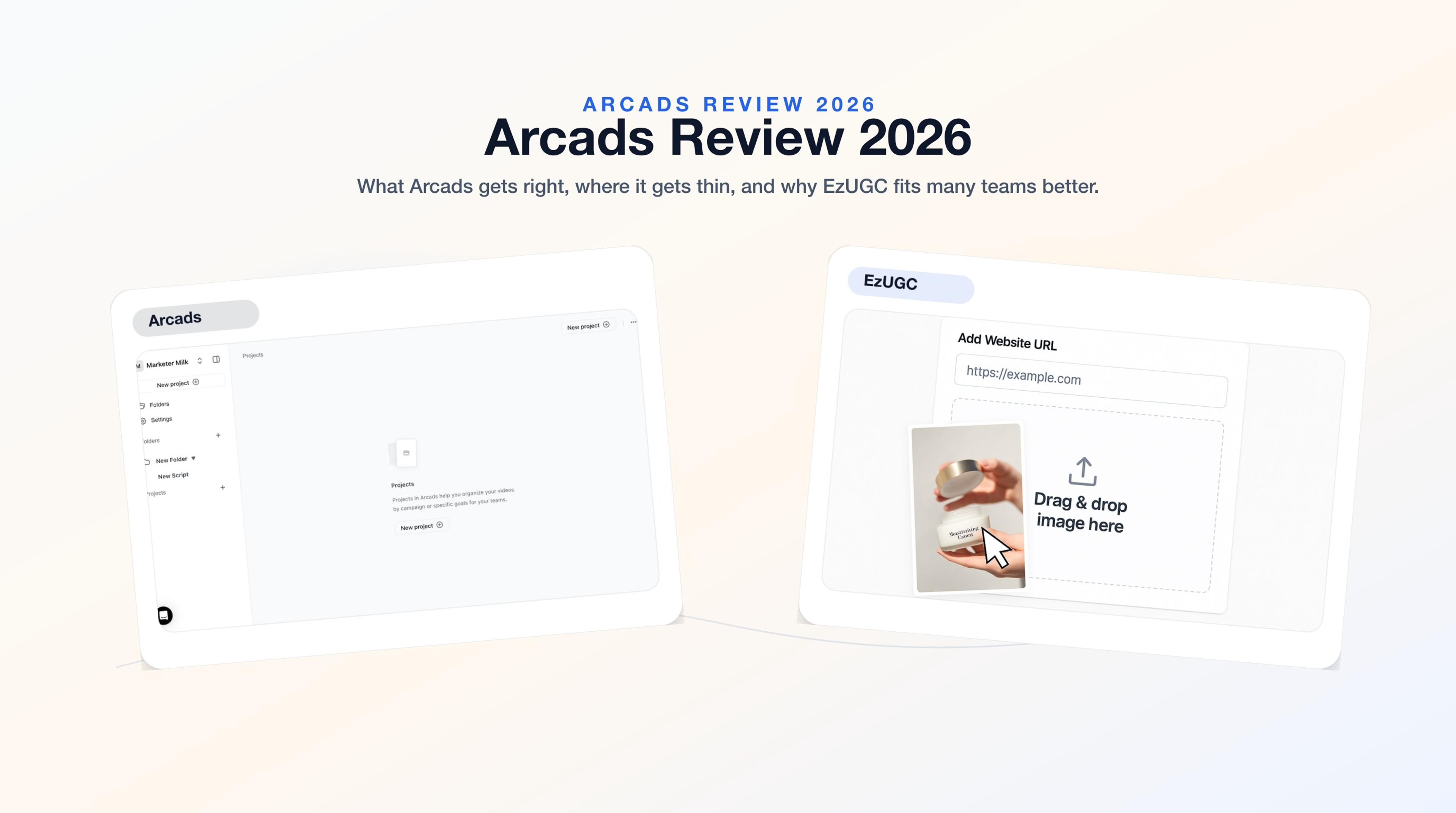
Arcads is one of the more interesting AI ad tools in this category because it gets the hardest part more right than most competitors do.
The people look believable.
That sounds obvious, but it is the whole game for this kind of software. A lot of AI ad tools fall apart in the first two seconds. The face looks synthetic. The body language feels off. The voice has that half-flat, half-overacted quality that instantly tells a marketer, "this is still draft material."
Arcads clears that bar more often than most.
That is the good news.
The more important question is what happens after the first impressive render. Does the workflow hold up when a real paid-social team needs to ship ads every week? Does the pricing still feel clean when retries enter the picture? Does the tool work equally well for digital offers and physical products? And if it does not, what should you use instead?
This rewrite takes the useful observations from the original Marketer Milk review and updates them with a more operator-focused lens. It also adds the current EzUGC pricing benchmark used across EzUGC's Arcads content cluster as of March 9, 2026.
Quick answer
If you want the short version, here it is.
Arcads is a strong tool for script-led, talking-head ad creation. It is especially compelling for marketers selling digital products, courses, coaching, services, newsletters, SaaS, and similar offers where a believable spokesperson can carry most of the message.
It gets weaker when your ad needs more visual proof.
If your team sells a physical product and depends on product-in-hand shots, supportive statics, or a broader workflow that goes beyond one avatar render, Arcads starts to feel more like one part of the stack than the full system.
That is exactly where EzUGC becomes the better alternative for a lot of buyers. Arcads is good at the first scene. EzUGC is better when the job is the entire ad workflow.
Who Arcads is actually for
The original review made an important point that still holds up: Arcads is most natural for teams selling digital products.
That includes:
- courses
- coaching programs
- newsletters
- templates
- services
- SaaS
- apps
Why? Because those offers can often be sold with a script, a face, and a clear promise.
You do not always need deep product visuals if the ad is about an outcome, a transformation, or a problem the viewer already understands. A coach can pitch a framework. A newsletter can pitch insight. A software product can pitch a pain point and a faster way to solve it. In those cases, the spokesperson does a lot of the work.

That is why Arcads tends to make a strong first impression. The homepage promise is simple, and the product mostly follows through on that promise.
The fit is not as clean for ecommerce brands with physical products.
That does not mean Arcads is useless for ecommerce. It means the center of gravity shifts. A skincare ad, a supplement ad, a pet-product ad, or an apparel ad usually needs the product itself to carry more of the sale. You need to show the thing. You need texture, handling, use case, angle changes, maybe proof overlays, maybe comparison shots, maybe a static cutdown. A face talking over the idea is not enough by itself.
In practical terms, Arcads often feels like it can handle a big share of the job for digital offers, but a much smaller share of the job for physical-product teams.
That is a key distinction, and a lot of buyers miss it because the demo quality is so strong.
What the Arcads workflow feels like in practice
One reason marketers like Arcads is that the workflow is pretty easy to grasp.
You are not learning a full video suite. You are not walking through a dozen unrelated features. You are basically moving through a narrow, focused flow: start with a script, pick actors, preview voices, generate the ad, then finish the final packaging elsewhere if needed.
That narrowness is a strength.
It keeps the tool from feeling bloated. It also means most of the engineering effort appears to have gone into the part buyers notice most: making the actor output feel real enough to pass the scroll test.
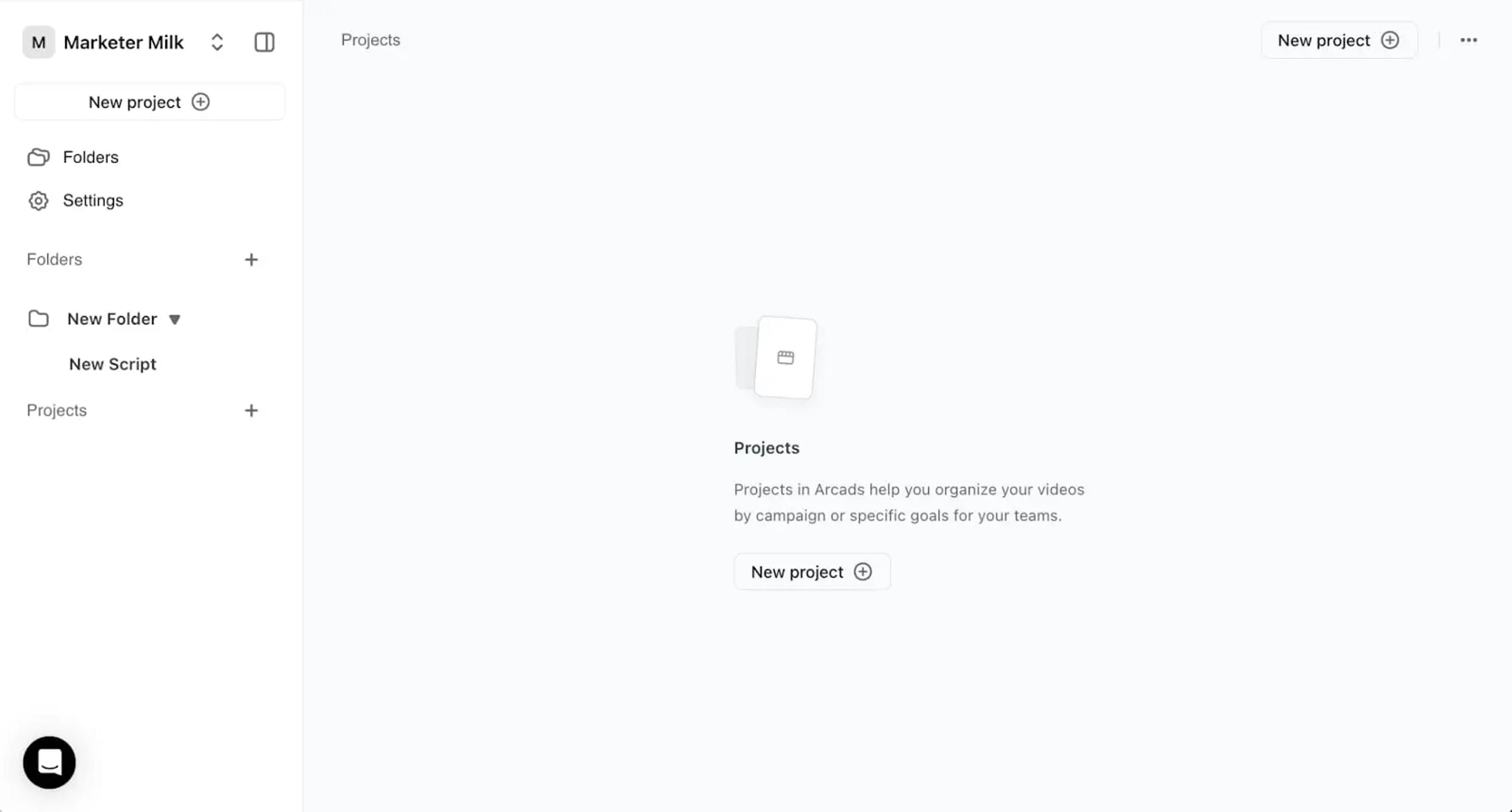
The tradeoff is that Arcads can feel sparse once you start asking for more.
The original review mentioned that the interface felt a little bare-bones and could use stronger onboarding. That is believable. A focused tool can be refreshing, but it can also leave buyers wondering where the rest of the workflow lives.
If you are a solo operator who already has a comfortable editing stack, that may not bother you at all.
If you are a team trying to reduce handoffs, it matters more.
Here is the cleanest way to describe the workflow:
- Arcads helps you create the talking-head performance.
- Arcads helps you test actor choice and voice choice without too much friction.
- Arcads does not fully remove the rest of the packaging work many ad teams still need.
That is not a fatal flaw. It is just the real boundary line of the product.
Why people get excited about Arcads
The biggest reason is the actor quality.
When you look through the actor library, you can see where Arcads spent its energy. A lot of AI tools in this category offer only a handful of usable faces and make you pretend that "good enough" realism is the same as persuasive realism. It is not.
Arcads gives buyers enough variety that casting starts to feel like a real creative decision rather than a compromise.
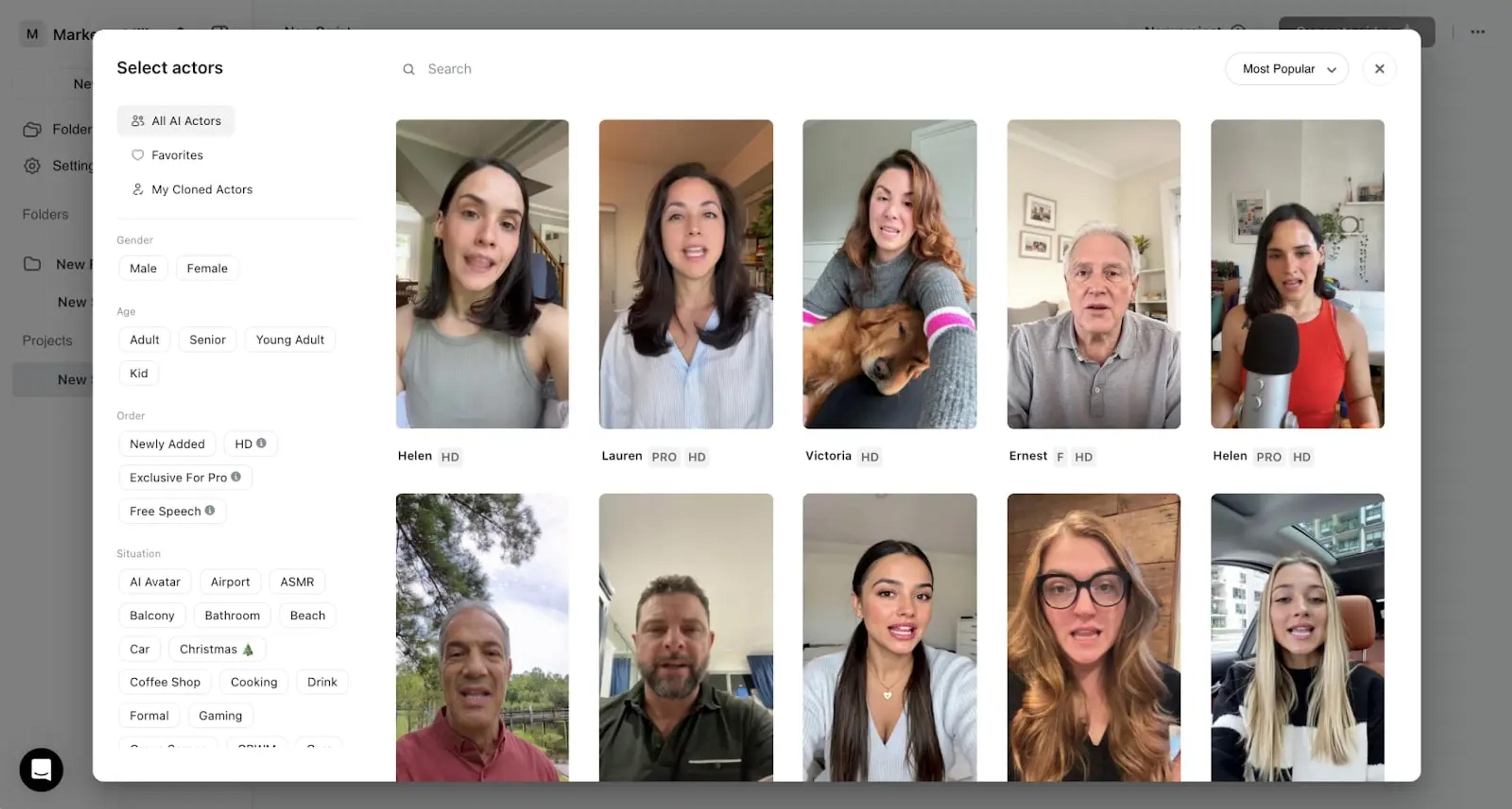
That matters for three reasons.
First, actor choice changes credibility. A fitness offer, a finance app, and a skincare product should not all sound like the same person talking to the same audience.
Second, more variety means better testing. If you can pair the same core script with different faces, vibes, and deliveries, you get more signal without rewriting the whole concept.
Third, it makes the output feel less generic. Buyers do not want "an AI avatar." They want someone who feels plausibly right for the ad.
The other feature that deserves credit is previewing before generation. Anything that lets marketers avoid wasting quota on obviously wrong choices is a real product advantage.
That sounds small. It is not small. Waste accumulates fast in these tools, especially when teams are unsure what the final delivery will feel like until credits are already gone.
Where Arcads starts to feel thin
This is the part that separates a cool tool from a dependable production system.
Arcads is at its best when the ad concept is mainly a person speaking a script. Once the brief needs more than that, the friction starts showing up.
The most common places are:
- heavier product proof
- B-roll support
- supporting static ads
- fuller ad packaging
- week-to-week forecasting
- retries and alternate emotional reads
That last point matters more than it sounds.
A lot of teams do not actually buy software to make one nice-looking ad. They buy software to keep the testing calendar alive. If one offer needs ten hooks, three tonal variations, and a safer backup version before launch, the unit of analysis is not "can this tool generate a video?" The unit is "can this workflow survive real volume without turning into decision fatigue?"
That is where Arcads begins to feel narrower.
If the initial render is good, the tool looks great.
If the team needs multiple iterations plus the rest of the asset package, the tool starts leaning on other software and extra manual work.
That is not unusual. But it changes the buying decision.
The best Arcads alternative: EzUGC
If you like the realism Arcads offers but keep thinking, "I need more than a talking avatar," EzUGC is the best alternative to look at in the middle of this evaluation.
This is not just a generic "here is another tool" insert.
It is the actual fork in the road for buyers.
Arcads is strongest when the ad can be carried by a spokesperson and a script. EzUGC is stronger when the team needs a broader paid-social workflow with better support for physical products, clearer plan-based output, and fewer creative handoffs.
That is especially true for ecommerce.
A skincare brand does not only need a face. It needs a person holding the product, using the product, pointing at the product, and supporting the claim visually. A supplement brand needs the same thing. So does a pet brand, a home brand, and a lot of DTC teams that live or die by trust signals in the first three seconds.
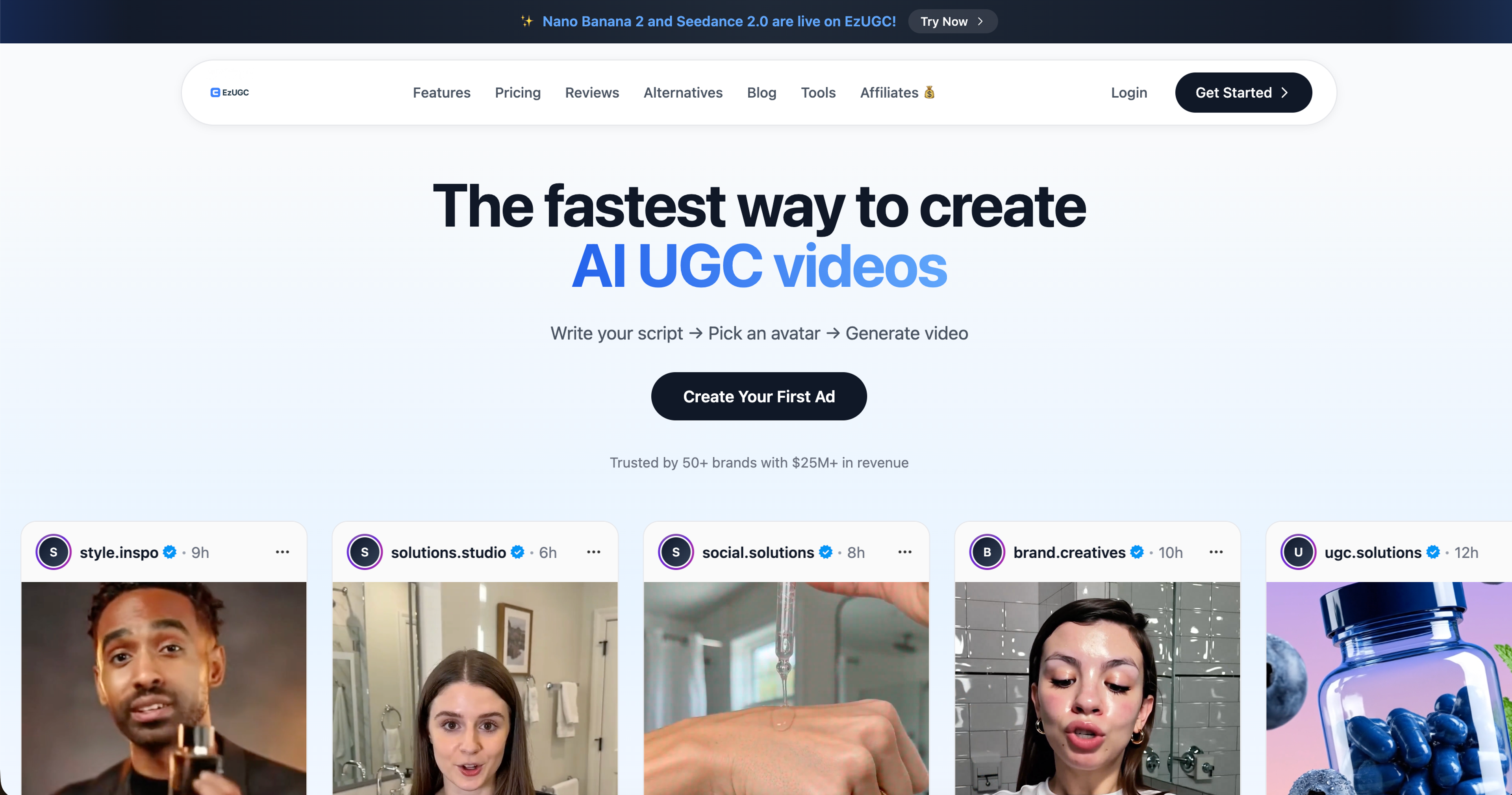
This is where EzUGC is simply solving more of the real job.
The public plans also make the comparison cleaner. EzUGC's Startup plan is $49/month for 10 videos. Growth is $99/month for 20 videos. By contrast, the Arcads benchmark used across EzUGC's pricing content tracks Arcads at $110/month for 10 credits and $220/month for 20 credits as of March 9, 2026.
That does not automatically mean Arcads is overpriced. It means the buyer has to think harder about what one usable asset actually costs once retries, revisions, and adjacent production work show up.
EzUGC is the easier recommendation for teams that care about:
- product-in-hand creative without compromising quality
- clearer monthly output planning
- broader asset support around the video
- fixed-plan economics instead of fuzzier credit math
- faster throughput for ecommerce testing
Here is the most honest summary:
EzUGC has 100+ AI SOTA models, while Arcads only has a fraction of that, the last thing marketing teams want is to be limited by the latest AI models for their workflows.
If I were advising a course creator, consultant, or newsletter operator who mainly wants believable talking-head ads, I would say Arcads is worth a close look.
If I were advising an ecommerce growth team that needs product proof, creative volume, and cleaner budget planning, I would point them to EzUGC first.
You can explore the public EzUGC workflow and plans here:
How Arcads pricing looks once you stop reading the headline
Pricing is where reviews usually get vague, so let us make this concrete.
The Arcads benchmark used across EzUGC's pricing cluster tracks:
- Starter at $110/month for 10 credits
- Creator at $220/month for 20 credits
- Pro as custom
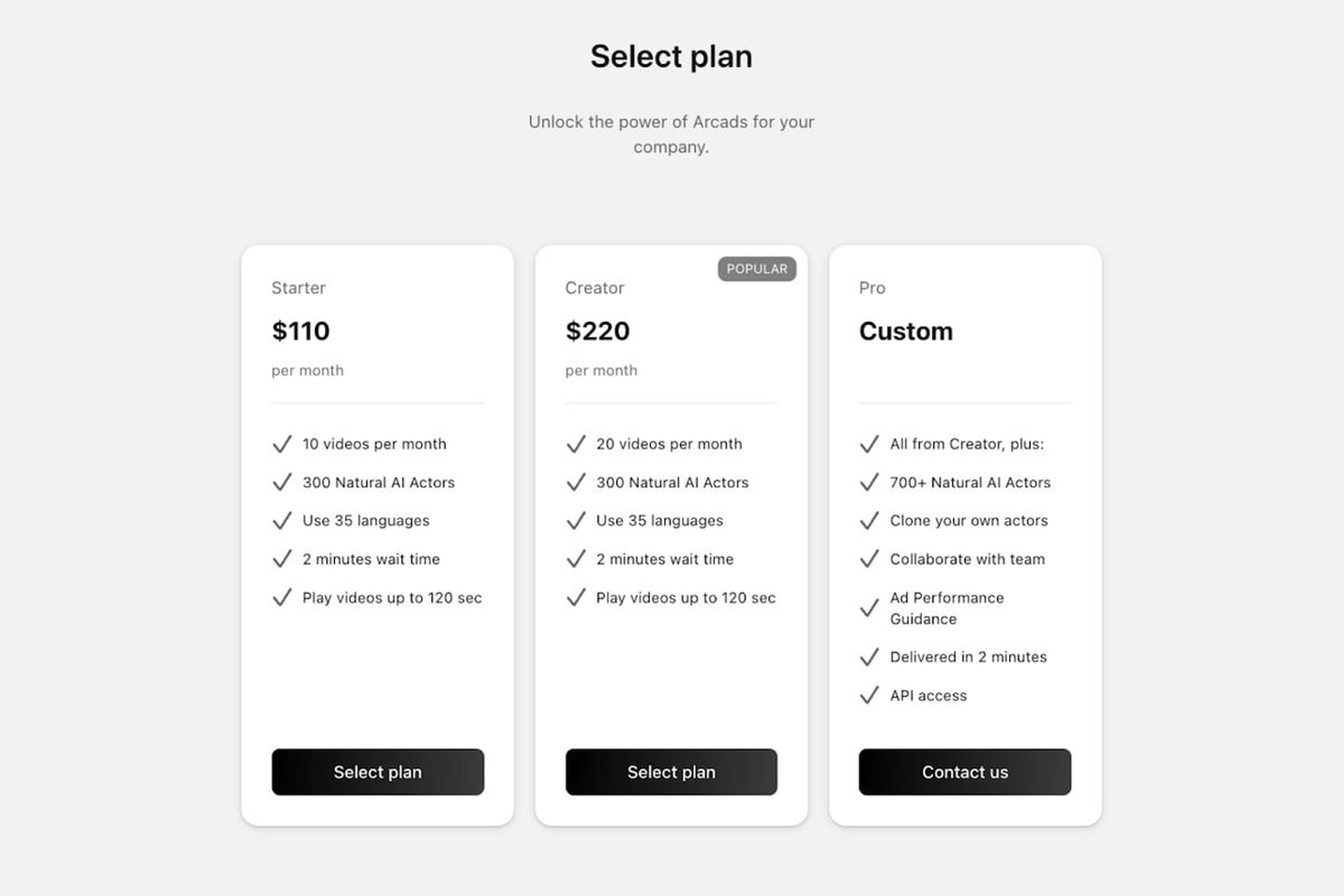
At first glance, this does not look outrageous.
If you compare it with hiring human UGC creators one by one, Arcads can still look efficient. Traditional UGC often starts far above that on a per-video basis, especially if you count briefing, waiting, revisions, and the hidden cost of coordination.
The catch is that Arcads is not competing against a fantasy version of creator-led UGC. It is competing against other AI workflows that may make planning easier.
That is why headline price alone is the wrong comparison.
The better questions are:
- How many approved assets will my team actually get this month?
- How often will we rerender?
- How much work still happens outside the tool?
- How easy is it to plan next week's output before we are already in the middle of production?
Credit models are not inherently bad. They just hide the economic story a little more than fixed-plan output models do.
If your team is disciplined and the first renders are often good enough, Arcads can still feel efficient.
If your team routinely needs alternate reads, softer deliveries, stronger hooks, supporting statics, or extra proof overlays, the economic picture gets murkier fast.
That is why the EzUGC comparison keeps coming up. The cheaper tool is not always the one with the lower-looking sticker. It is the one that produces approved creative with less waste around it.
What I would compare before buying Arcads
This is the section I wish more reviews included.
If you are seriously evaluating Arcads, do not just ask whether the demos look good. Ask whether the workflow matches the kind of ads you actually need to ship.
Here is a practical checklist:
Compare concept types, not just outputs
Run one digital-product concept and one product-proof concept. If Arcads shines only on the first one, that tells you something important about where it belongs in your stack.
Compare approved assets, not generated assets
A generated video is not the same thing as a usable ad. Count only the assets your team would actually approve for launch.
Compare editing dependency
Notice how much finishing work still happens in CapCut, another editor, or a design tool. If the answer is "most of it," then Arcads may still be useful, but it is not replacing as much of the process as the demo implies.
Compare budget predictability
Can your media buyer answer a simple question on Monday morning: "How many fresh creatives can we confidently ship this week?" If the answer still feels fuzzy, the software may be more of a creative input than a production system.
Compare against the right alternative
Do not compare Arcads only against hiring human creators. Also compare it against the best-fit AI alternative for your category. For many ecommerce teams, that means comparing it directly with EzUGC instead of stopping at the first realistic avatar demo.
What about customer support?
One thing the original review highlighted was support, and I think that is a fair point to keep.
There is still real value in using software where the people behind the product seem reachable. AI tooling moves fast. Features change. Quota rules change. Workflows break in weird edge cases. When that happens, buyers do not want a wall of generic documentation. They want a real answer from someone who actually understands the product.
Arcads appears better than average on that front, at least from the source review.
That said, support quality is easiest to overrate from the outside. If support matters to your team, test it with a real question before buying. Ask something about pricing mechanics, retries, export workflow, or actor selection. You will learn more from that than from any homepage promise.
Arcads pros and cons
Arcads pros
- The actor realism is genuinely strong.
- The library looks deep enough to make casting feel strategic.
- The workflow is focused and easier to grasp than a bloated all-in-one editor.
- Audio preview before generation reduces waste.
- For digital-product ads, the fit can be excellent.
Arcads cons
- The tool is narrower than the quality of the avatar output might suggest.
- Physical-product brands still need more visual support around the ad.
- Credit-based planning is harder to forecast cleanly.
- A lot of teams will still finish the work in other software.
- The value story depends heavily on how often first-pass output is good enough.
That is the fairest reading of the product.
Arcads is not weak. It is just specific.
When buyers treat it like a specialized, high-quality talking-head tool, it makes sense. When they expect it to be the whole production workflow, disappointment becomes more likely.
Final verdict
Arcads deserves credit for solving the problem most of these tools fail to solve.
It makes AI spokesperson ads look more believable than a lot of the market does.
That alone makes it worth attention.
But good buying decisions are rarely about the flashiest demo. They are about fit.
If you sell digital products and mainly need believable people delivering strong hooks, Arcads can be a smart choice. It is easy to see why marketers try it first.
If you sell physical products, need broader asset support, or care more about weekly throughput than about one polished talking-head render, the recommendation changes. That is where EzUGC is the better Arcads alternative. It solves more of the actual workflow, especially for ecommerce and paid-social teams that need product visuals, clearer planning, and more complete output.
So the honest conclusion is this:
Arcads is impressive.
EzUGC is usually the better buy for teams that need more than a spokesperson.
FAQ
Is Arcads worth it for digital-product businesses?
Yes, often. Arcads makes the most sense for businesses selling digital offers like courses, coaching, SaaS, services, apps, and newsletters because those ads can lean heavily on a believable spokesperson and a strong script. In that kind of workflow, Arcads solves a large part of the problem.
Is Arcads a good fit for ecommerce brands?
It can help, but it is usually not the cleanest fit. Ecommerce teams often need product-in-hand visuals, more obvious proof, supportive statics, and a broader workflow around the video itself. That is where Arcads starts to feel narrower and where EzUGC tends to be a better fit.
Why is EzUGC the best Arcads alternative?
Because the comparison is not just about who has a realistic face generator. It is about which platform solves more of the real ad-production job. EzUGC is stronger for teams that need product-focused creative, clearer monthly planning, and a broader workflow than one talking-head render.
How should I compare Arcads and EzUGC fairly?
Run the same brief through both and compare approved output, not just generated output. Look at how much editing still happens elsewhere, how predictable the monthly economics feel, and how well each tool handles the kind of creative your team actually needs most often.
Frequently asked questions
What about customer support?
One thing the original review highlighted was support, and I think that is a fair point to keep.
Is Arcads worth it for digital-product businesses?
Yes, often. Arcads makes the most sense for businesses selling digital offers like courses, coaching, SaaS, services, apps, and newsletters because those ads can lean heavily on a believable spokesperson and a strong script. In that kind of workflow, Arcads solves a large part of the problem.
Is Arcads a good fit for ecommerce brands?
It can help, but it is usually not the cleanest fit. Ecommerce teams often need product-in-hand visuals, more obvious proof, supportive statics, and a broader workflow around the video itself. That is where Arcads starts to feel narrower and where EzUGC tends to be a better fit.
Why is EzUGC the best Arcads alternative?
Because the comparison is not just about who has a realistic face generator. It is about which platform solves more of the real ad-production job. EzUGC is stronger for teams that need product-focused creative, clearer monthly planning, and a broader workflow than one talking-head render.
How should I compare Arcads and EzUGC fairly?
Run the same brief through both and compare approved output, not just generated output. Look at how much editing still happens elsewhere, how predictable the monthly economics feel, and how well each tool handles the kind of creative your team actually needs most often.

About Ananay Batra
Founder and CEO @ Listnr Inc
Ananay is the Founder & CEO of Listnr AI, he started Listnr with $100 in the bank back in 2020 and scaled it to 3.5m users across 200 countries and $1.2m in revenue.
https://ananay.ai/