
TL;DR
If you ship voiceovers weekly, pick **Listnr** for speed + team workflow. If you’re chasing maximum realism and character performance, pick **ElevenLabs**. If you’re an enterprise or building at scale, **Azure AI Speech** (or **Polly** for AWS) wins on govern…
Best Text to Speech Tools Ranked (2026)
If you care about getting crisp, believable voiceovers out the door fast, this is your playbook. The market is flooded with demo voices and AI hype, but most of it falls apart when you throw in real scripts, last-minute edits, or need to switch from English to Hindi to Spanish in the same project. This guide is for the operators: creators, editors, PMMs, educators, and devs who ship every day and need tools that work under pressure, not just in a demo.
We ran every tool like a real team: messy scripts, tight deadlines, and the kind of edits that happen five minutes before launch. If you want voices that can sell a joke, nail a product demo, or carry authority in a training module without blowing your budget or drowning in legal gray zones, read on.
Quick-Scan: Top TTS Tools at a Glance
| Tool | Best For | Pricing (2026) | Standout Feature |
|---|---|---|---|
| Listnr | Fast, natural VO for teams and creators | $9.50-$49.50/mo (annual) | Emotion and pacing controls |
| ElevenLabs | Cinematic realism, dubbing, characters | $5-$1,320/mo (annual) | Hyper-real style transfer |
| Azure AI Speech | Enterprise, scale, governance | $9.75-$12/1M chars (commit) | Custom neural voices, SLAs |
| Amazon Polly | Cost control, dev automation | $4-$100/1M chars (by engine) | Predictable AWS integration |
| Google Cloud TTS | GCP-native, WaveNet/Neural2 | Free tier + per 1M chars | Wide locale, free monthly use |
| Murf | Corporate training, e-learning | $19-$66/mo (annual) | Slide-to-VO, team workflows |
| Speechify API | Low-latency, agent/reading apps | $10/1M chars | Sub-second latency |
| Resemble AI | Cloning, compliance, deepfake detect | $19-$99/mo | Consent workflows, detection |
| WellSaid Labs | Studio-grade narration, e-learning | $49-$199/mo (annual) | Pronunciation lexicons |
The 2026 TTS Power Rankings
Listnr - Best Overall for Creators and Teams
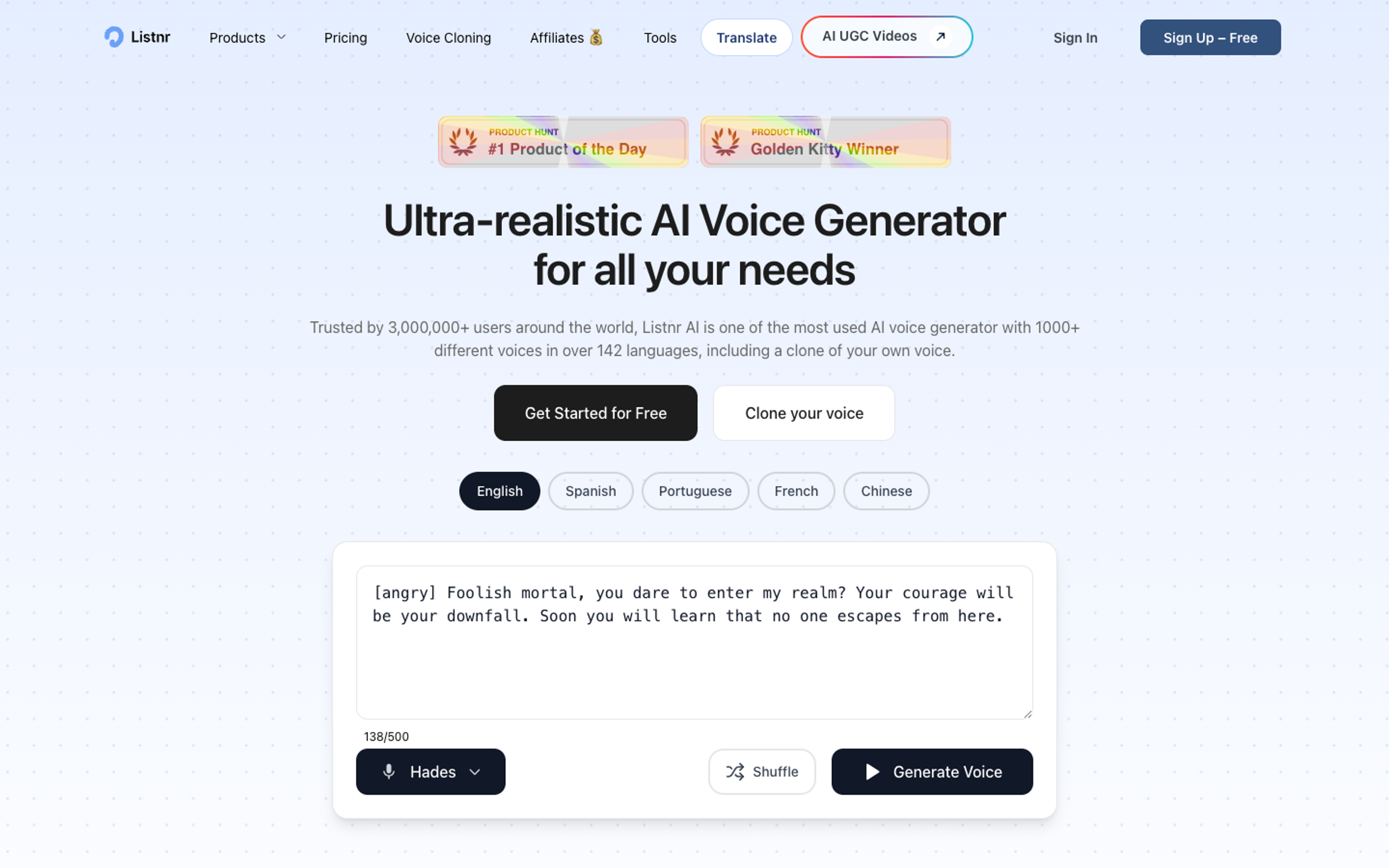
Listnr is built for people who need to ship: shorts, trailers, demos, podcasts, and course modules. The cadence is natural, pacing and pauses are easy to tweak, and preview loops are fast with no babysitting required. The voice catalog is broad, multilingual, and full of usable dialects, and you get batch exports, folders, and shareable projects for team workflows.
Pros:
- Fast preview-to-final render. You can iterate quickly without waiting.
- Clear quotas and storage per tier with fewer billing surprises.
- Reliable for daily creators; you are less likely to get stuck in a queue.
Cons:
- Power users may want even deeper SSML hooks in some voices.
- Credits can burn fast on very long content if you do not plan.
Pricing: Individual $9.50, Solo $19.50, Agency $49.50 (annual billing only).
Best for: Channels shipping frequent content where speed and consistency matter. If you want a studio that feels like an operator's tool, not a toy, Listnr is the move.
ElevenLabs - Most Hyper-Real and Cinematic
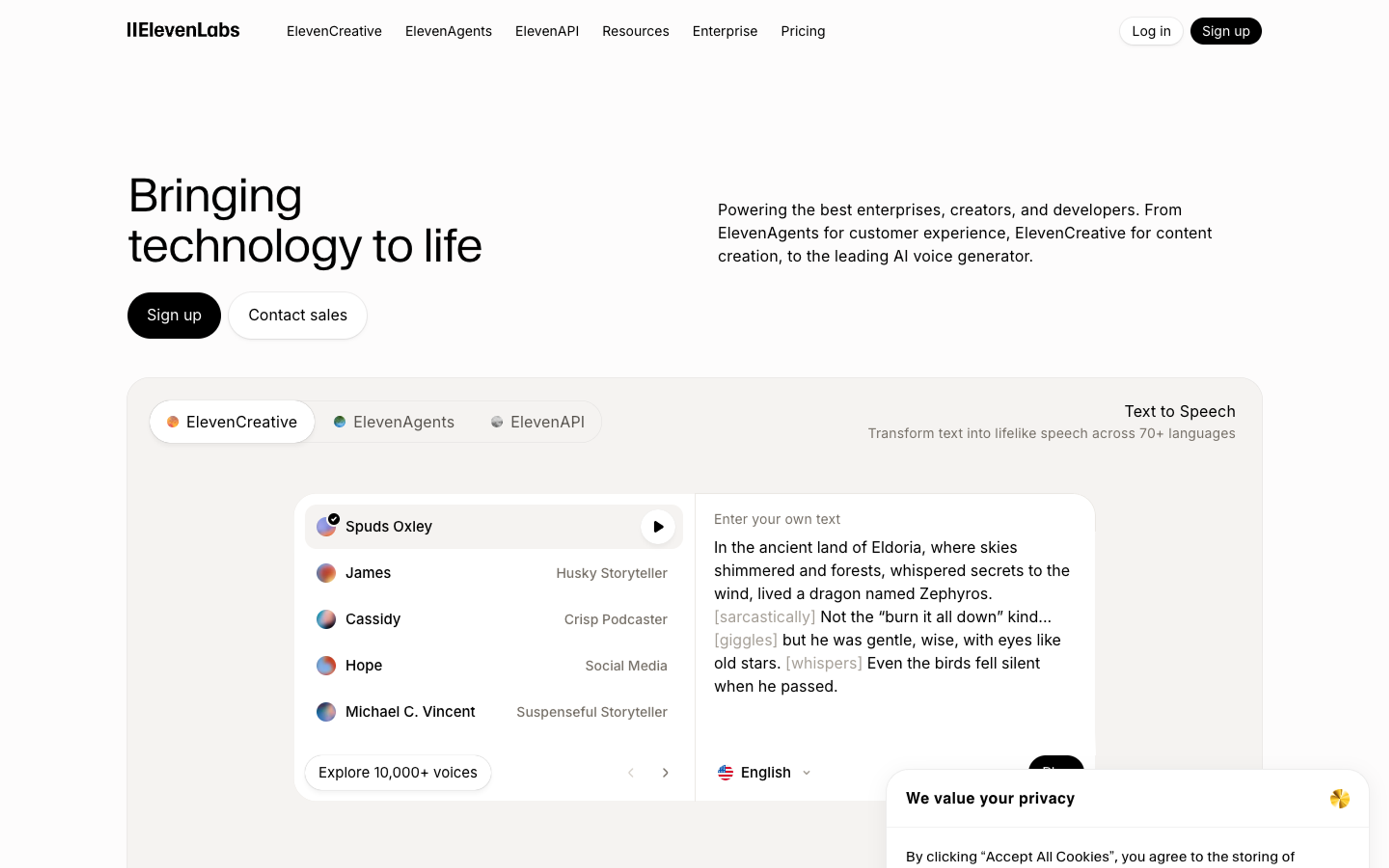
If you need voices that sound like they could headline a trailer or nail a character read, ElevenLabs is still the bleeding edge. The emotional range and style transfer are unmatched, and the roadmap moves fast. It is great for stylized reads, multilingual dubbing, and creative experimentation.
Pros:
- Top-tier naturalness and emotion.
- Rapidly expanding models and creative features.
Cons:
- Usage can spike at scale, so budget carefully.
- Advanced features take time to master.
Pricing: Starter $5, Creator $11, Pro $99, Scale $330, Business $1,320 (annual).
Best for: Trailers, characters, and premium dubbing where realism is non-negotiable.
Azure AI Speech - Enterprise Cloud API at Scale
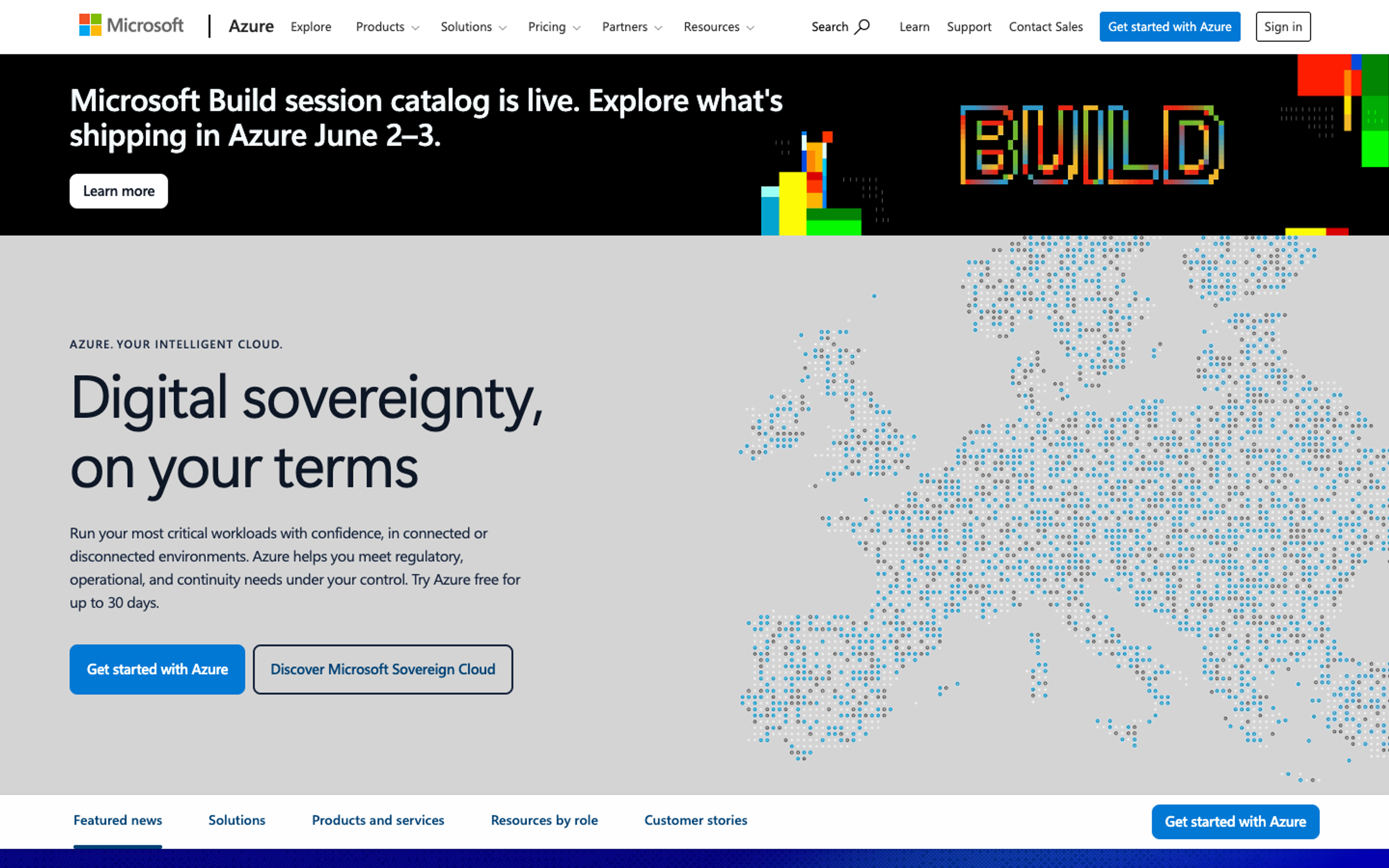
Azure AI Speech is for teams that need governance, regional hosting, and predictable spend. You get a huge voice catalog, custom neural voices, and batch or real-time synthesis with SLAs. The documentation and support are enterprise-grade.
Pros:
- Attractive unit economics at volume.
- Enterprise support, compliance, and security.
Cons:
- Budgeting is usage-driven, not seat-based.
- Custom voice setup is a process.
Pricing: Neural TTS $12/1M chars at 80M commit, $9.75/1M at 400M. Larger bundles available.
Best for: Global apps, IVR fleets, and localization programs that live on Azure.
Amazon Polly - Budget Workhorse for Developers
Amazon Polly is the old reliable: plain pricing, solid voices, and bulletproof SDKs. If you are building programmatic generation or documentation readers, it is hard to beat for cost control and automation inside AWS.
Pros:
- Extremely predictable cost structure.
- Tight AWS integration and monitoring.
Cons:
- Realism trails the top creative tools.
- UI and workflow are built for developers, not creators.
Pricing: Standard voices from $4/1M chars, neural from $16/1M, long-form and generative tiers higher.
Best for: Developers, automation-heavy workflows, and teams who care most about cost and AWS fit.
Google Cloud Text-to-Speech - WaveNet and Neural2 on GCP
Google Cloud Text-to-Speech stays relevant because it has deep locale coverage, solid voice quality, and an easy on-ramp for teams already in GCP. WaveNet and Neural2 are still practical workhorses when you need broad language support and API consistency.
Pros:
- Strong language coverage and GCP integration.
- Free monthly usage makes it easy to prototype.
Cons:
- Product packaging is utilitarian, not creator-friendly.
- The best voices still feel more functional than magical.
Pricing: Free monthly allowance, then pay-as-you-go by voice family and character count.
Best for: Teams already standardized on Google Cloud and products that need broad multilingual support.
Murf - Corporate E-Learning and Slide-to-VO
Murf remains a strong practical tool for training, explainers, and business narration because it understands the workflow around voice, not just the voice itself. Slide-to-voice features, team review flows, and template-oriented creation matter more than people admit.
Pros:
- Good collaboration fit for business content teams.
- Easy for non-technical teams to adopt.
Cons:
- Not as expressive as ElevenLabs or Hume.
- API and real-time stories are not its strongest angle for most buyers.
Pricing: Creator $19, Growth $66, Business pricing above that on annual billing.
Best for: Training teams, internal enablement, course creators, and business explainers.
Speechify API - Low-Latency, Pay-As-You-Go
Speechify API matters because it is optimized around responsive playback and reading experiences. If your use case is less "studio narration" and more "fast, clean audio that shows up instantly," it becomes a very different kind of buy.
Pros:
- Fast latency profile.
- Simple usage pricing.
Cons:
- Less of a full creator studio than Listnr or Murf.
- The product is more API-first than content-team-first.
Pricing: $10 per 1M characters.
Best for: Reading apps, assistants, and products where response time is a bigger deal than theatrical delivery.
Resemble AI - Enterprise Cloning and Deepfake Detection
Resemble AI has always made more sense when voice is part of a product system, not just a media export. The platform is stronger than most when cloning, API control, and authenticity risk sit in the same buying conversation.
Pros:
- Better safety and consent posture than many competitors.
- Strong fit for custom voice systems.
Cons:
- Overkill for most solo creators.
- Product depth can be heavier than what simple workflows need.
Pricing: Plans from $19 to $99, with enterprise tiers above that.
Best for: Enterprises, cloning-heavy products, and teams that want safety controls in the same stack.
WellSaid Labs - Studio-Grade Commercial Narration
WellSaid Labs still matters because consistency is its whole pitch. The voice library is curated instead of chaotic, and that makes it unusually effective for training, onboarding, and commercial narration where "stable and polished" beats "wildly expressive."
Pros:
- High baseline narration polish.
- Good pronunciation control and repeatability.
Cons:
- Not the cheapest route for heavy usage.
- Less flexible for experimental or highly emotional reads.
Pricing: Maker $49, Teams $199, enterprise beyond that.
Best for: E-learning, onboarding, polished explainers, and brand-safe narration.
How We Actually Ranked: Methodology and What Changed for 2026

We did not rank these tools by listening to a 15-second homepage demo and calling it a day. We looked at the things that break real workflows:
- How natural the voice stays across longer scripts
- How easy it is to control pacing, emphasis, and pronunciation
- How bad the pricing gets once usage becomes real
- Whether the workflow fits creators, teams, or developers
- Whether multilingual support is genuinely usable
- Whether the product is moving forward or just coasting on reputation
The 2026 market is cleaner than the 2025 market. A few names that used to sit on every list are gone or irrelevant. What replaced them is a sharper split between creator studios, enterprise infrastructure, and premium expressive voice systems.
FAQs
How should I compare pricing across TTS tools?
Do not compare sticker prices alone. Convert everything to either cost per 1M characters or cost per finished minute, then factor in storage, exports, premium voices, and seat limits.
Which TTS tool is best for ads and multilingual voiceovers?
Listnr is the best all-around answer for teams that need multilingual output and fast production. ElevenLabs is stronger when realism and performance are the top priority.
Do these tools support SSML, emotion, and pacing control?
Yes, but the depth varies a lot. Hyperscalers cover SSML broadly. Creative tools differ more on emotion, pacing, and delivery control, which is where Hume, ElevenLabs, and Listnr separate themselves.
What about cloning and legal consent?
Only clone voices with explicit rights and written consent. Some vendors now build that into the workflow, but the burden is still on you to keep the paper trail clean.
How do I minimize latency for live agents or calls?
Pick a vendor with streaming synthesis, keep deployment close to users, and avoid unnecessary transcoding. For that kind of work, latency often matters more than pure narration quality.
Are credits the same as characters or minutes?
No. Credit systems often hide the real economics. Normalize them into cost per character or cost per finished minute before you decide anything.
Which tools are best for long audiobooks or courseware?
Azure and Polly are cost-effective for huge narration volumes. Murf and WellSaid are stronger when review workflows and polished narration matter more than raw unit economics.
What about licensing for ads, podcasts, and resale?
Commercial use is common now, but the details still matter. Resale, redistribution, political use, and cloned voices usually carry tighter restrictions.
How do I test language quality, not just coverage?
Run the same paragraph across vendors, include acronyms and brand names, and use native review before you trust the result. A language count on a pricing page is not the same as language quality.
What data is retained when I render audio?
That depends on the vendor and the plan. If privacy matters, check retention settings, opt-out controls, and enterprise terms before you put sensitive copy into the system.
Conclusion: What to Pick and When
- Daily content, tight turnaround: Listnr.
- Maximum realism, stylized reads: ElevenLabs.
- Millions of characters, governance: Azure AI Speech.
- Pure cost control: Amazon Polly.
- GCP stack, WaveNet needs: Google Cloud TTS.
- Training at volume with team workflows: Murf.
- Agent-style, low-latency synthesis: Speechify API.
- Cloning plus authenticity tooling: Resemble AI.
- Corporate narration, e-learning: WellSaid Labs.
Do not buy on demo voices or marketing copy. Run your own scripts, normalize pricing, and pick the tool that matches your workflow instead of the one with the flashiest samples.
Frequently asked questions
What’s the fastest way to evaluate a TTS tool without wasting a week?
Run one ugly, real script through every tool: acronyms, brand names, numbers, and a few emotional turns (joke → serious → CTA). Then do one last-minute edit and re-render. The best tool isn’t the one with the prettiest demo—it’s the one that stays natural after edits and doesn’t make you fight pacing, pronunciation, or exports.
Is Listnr good enough if I care about realism, not just speed?
Yes for most commercial creator work—ads, explainers, product demos, shorts, podcasts—because the workflow is built for iteration and the voices stay believable across longer scripts. If you’re doing cinematic character work where performance is the product, ElevenLabs still tends to edge it on raw expressiveness.
Which tool is best for multilingual voiceovers (English + Hindi + Spanish in one project)?
Listnr is the most practical “ship it” answer for multilingual production because it’s designed like a studio, not just an API. If you’re already deep in a cloud stack and need broad locale coverage with predictable infrastructure, Google Cloud TTS (GCP) and Azure AI Speech (Azure) are the safer enterprise defaults.
How do I compare pricing when every vendor uses different units (credits, characters, minutes)?
Normalize everything to cost per 1M characters and cost per finished minute. Then add the hidden multipliers: premium voices, export limits, seat requirements, storage, and whether you pay extra for commercial rights or higher-quality models. Credit systems are fine—until you try to forecast.
Which TTS is best for apps that need low latency or streaming audio?
If responsiveness is the core product (reading apps, assistants), Speechify API is built around that kind of playback-first experience. For enterprise-grade streaming and regional deployment control, Azure AI Speech is usually the more configurable infrastructure choice.
Can I legally clone a voice for ads or content?
Only with explicit rights and written consent. Some vendors (like Resemble AI) lean harder into consent workflows and authenticity tooling, but no UI checkbox replaces a clean paper trail. If you’re doing anything brand-sensitive, treat voice rights like music licensing: document everything.
What’s the best tool for long-form narration like audiobooks or huge course libraries?
If you’re optimizing for unit economics at massive volume, Azure AI Speech and Amazon Polly are hard to beat. If you’re optimizing for review workflows and consistent “corporate-polished” narration, Murf and WellSaid Labs are usually the better operational fit—even if the per-unit cost is higher.
Do these tools support SSML and pronunciation control?
Most do, but the experience varies. Hyperscalers (Azure, Google, AWS) are typically strongest on SSML breadth and API consistency. Creator studios vary more: some give you simpler pacing/emphasis controls that are faster for non-technical teams, even if they expose less raw SSML.
What should I check for privacy and data retention?
Assume your script is sensitive until proven otherwise. Check whether the vendor stores prompts/audio, whether you can opt out of training, retention windows, and enterprise terms. If you’re narrating internal docs, legal copy, or unreleased product info, this matters as much as voice quality.
Sources
Listnr · Plan names and annual pricing referenced in the Listnr section.
ElevenLabs · Product reference for ElevenLabs TTS and plan context.
Microsoft Azure · Product reference for Azure AI Speech capabilities and enterprise positioning.
Amazon Web Services · Pricing reference for Polly character-based billing and engine tiers.
Google Cloud · Pricing reference including free tier and per-character billing.
Murf · Product reference for Murf’s TTS and creator workflow positioning.
Speechify · API reference for Speechify’s developer offering and pricing unit.
Resemble AI · Product reference for voice cloning and enterprise controls.
WellSaid Labs · Pricing reference for WellSaid Labs plans and positioning.

About Ananay Batra
Founder and CEO @ Listnr Inc
Ananay is the Founder & CEO of Listnr AI, he started Listnr with $100 in the bank back in 2020 and scaled it to 3.5m users across 200 countries and $1.2m in revenue.
https://ananay.ai/